
The Puzzle of the Two Creations
Have you ever read the Bible? In its entirety? Few have. At least Genesis, then. Genesis? Yes, the beginning, the introduction: when God creates the heavens, the earth, living beings, and finally, the man Adam. Well, Adam and Eve. You know this story, and often little else. When I discuss the Bible with friends or students, not always ignorant of religious facts, I often notice an abyss of ignorance about biblical history, as if people jump directly from Adam to Jesus. Ah yes: people also know Abraham and Moses.
I have always loved the beginnings of stories. The Bible is no exception. I do not know how many times I have read and reread Genesis. And then one day, a passage puzzled me. On the sixth day, God decided to fill the earth with animals, birds, and creatures. Then it is written in Genesis 1:
God said, "Let us make mankind in our image, in our likeness, so that they may rule over the fish in the sea and the birds in the sky, over the livestock and all the wild animals, and over all the creatures that move along the ground."
So God created mankind in his own image, in the image of God he created them; male and female he created them.
God blessed them and said to them, "Be fruitful and increase in number; fill the earth and subdue it."
So far, nothing new. We understand that God has created man and woman at the dawn of the seventh day, which will see the Lord rest. However, there is no mention of Adam being alone in the garden, and especially no rib being removed. It is clearly written that on the sixth day, God "created them male and female" together, at the same time, on the same day.
So why, in the second chapter of Genesis, is Adam alone, without the woman who was previously created in the first chapter? This woman is "created again" during an operation where God takes one of Adam's ribs and fashions Eve from it. It should be noted that part of the intellectual subjugation of women promoted by later monotheistic readings has often been attached to this key moment. Eve will be the flesh of man's flesh, or more simply, she is presented as coming from him.
Older Texts, Later Traditions
I was nevertheless disappointed by this repetition of the female creation. My studies in ancient history taught me that the biblical text is also a compilation and reinterpretation of older texts, traditions, and cultures. It is difficult not to see echoes between Near Eastern creation stories and the biblical imagination. The famous myth of the Flood, for example, already appears in Mesopotamian traditions long before the final forms of the biblical text.
The Bible was written, compiled, and modified over a long period by several different authors and schools. Jewish tradition itself contains several interpretive layers, some very ancient, others medieval, mystical, or philosophical. By returning to these layers, one can explore the mystery of Genesis and this double creation of woman.
One of the most famous answers to this mystery is Lilith. She is not clearly named in Genesis as Adam's first wife; her story develops in later Jewish traditions, especially in medieval texts such as the Alphabet of Ben Sira, then in mystical and kabbalistic imagination. But once introduced into the story, she changes everything.
Lilith Refuses Submission
In this later tradition, God first creates man and woman together. The first we already know: Adam. The second is Lilith, often imagined as a woman of fierce beauty, independent will, and dangerous freedom. Adam is smitten. Unfortunately for him, Adam wants to establish a hierarchy in their relationship. He wants to dominate, including sexually, turning the body itself into a place of power.
But Lilith refuses. After all, why should she be inferior to man? She comes from the same divine will and, in this version, was created at the same time as Adam. She is not taken from his body. She does not owe him her existence. So why not equality? Why should the first woman bow?
Adam remains stubborn. Lilith is just as stubborn. The situation becomes impossible, and Lilith decides to flee. She pronounces the ineffable name of God, wings grow on her back, and she flies out of Eden to wander the earth.
Adam remains alone and sad. He laments and implores God to return what he considers his wife. Angels are sent to reason with Lilith and command her to submit. But she refuses. The angels threaten her with a terrible punishment: if she does not return, part of her offspring will die each day. The reversal is striking. In Genesis 1, man and woman receive the world together; in this later story, equality is quickly transformed into discipline.

The Birth of Eve
Desperate and defiant, Lilith does not return. This is where the well-known story resumes in Genesis 2. In the Garden of Eden, Adam is alone after having named the animals. God sees that "it is not good" for man to be alone. He puts Adam to sleep, takes one of his ribs, and fashions a woman from it.
Eve is born not as a simultaneous equal in the later Lilith reading, but as a companion made from Adam. This version can be, and often has been, interpreted as a theological foundation for female subordination. Eve becomes "bone of my bones and flesh of my flesh." She is close to Adam, but also derived from him.
And Lilith in all this? In the later legends, she feels betrayed. Contrary to what one might think, she too loved Adam, but not enough to accept domination. She hates Eve and her innocence. Eve takes her place, but also, in this reading, degrades the female condition by accepting what Lilith refused.

Demonization of the Rebel Woman
The tradition is not always clear on what follows. Lilith meets Samael, often identified in later traditions with a demonic or satanic figure, and becomes associated with the demonic world. The independent woman becomes a dangerous woman; the woman who refuses submission becomes a monster.
It is not always clear whether Lilith or Samael seduces Eve, but in some traditions Lilith is linked to the fall from Paradise. In later visual imagination, including some Renaissance readings, she can be represented through the figure of the serpent. She is also associated with Cain's violence, with sexual temptation, with nocturnal demons, and with everything that patriarchal imagination feared in uncontrolled female power.
This is the great mechanism of the myth: rebellion becomes demonic. A woman who says no is gradually transformed into a threat to children, men, marriage, and cosmic order.

Lilith and the History of Women
The story of Lilith plays a major role in the symbolic history of women. It explains, or at least dramatizes, the power struggle between woman and man at the imagined beginning of humanity. One may read it as an allegory, a vague memory of older tensions: the passage from possible female centrality to patriarchal domination, the domestication of sexuality, the control of lineage, and the fear of women who do not obey.
The most extraordinary aspect is the way monotheistic traditions often reshaped origin stories to accentuate the domination of man over woman. Jewish, Christian, and Islamic traditions each developed different ways of reading the first woman, the first fault, and female responsibility. Sometimes women were made secondary; sometimes dangerous; sometimes unnamed.
Lilith survives because she disturbs the system. She is the missing woman, the one who does not fit the later story. She is the answer to a textual tension, but also the embodiment of a refusal: not to be reduced to a rib, a possession, or a function.
The Medieval Night of Lilith
Two more things are still told about Lilith. In certain medieval traditions, she keeps a terrifying power over newborns. It is even said that if a child smiles into the void, perhaps he is playing with Lilith. Behind the superstition, one feels a very old anxiety: infant mortality, sleep, desire, and the invisible dangers of the night.
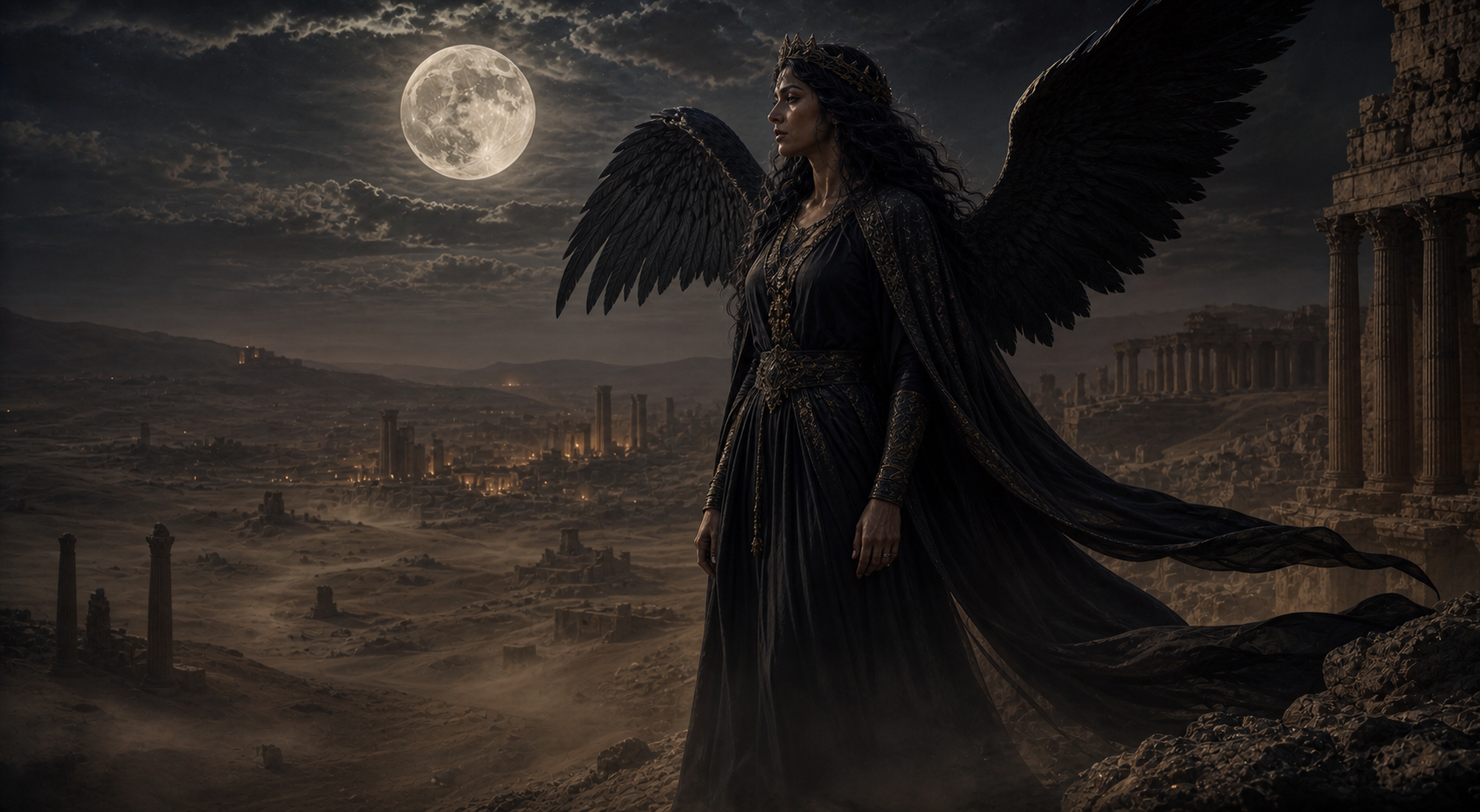
Finally, Lilith becomes one of the great figures of the succubus: the female demon who visits men at night and draws sexual energy from them. These stories persisted throughout the Middle Ages, despite ecclesiastical censorship and theological discomfort. People feared the one who, in later legend, was the first woman created by God.
And yet, modernity has reversed the image once more. Lilith is no longer only a demon. She has become a symbol of refusal, autonomy, and female power. The woman who would not submit to Adam returns not as a monster, but as a question: what if the first sin, in patriarchal memory, was not disobedience to God, but female freedom?
What the sources say
Primary sources and modern references are listed in the source section below when they are available in the article. Historical caution remains necessary: the article follows the limits of the cited material and avoids adding claims beyond the evidence already presented.
Further reading on Echoes of Antiquity
- Coup in Persia: Darius Against Gaumata and the Secret of Behistun
- From Ingots to Coins: The Journey to Being "Rich as Croesus
Sources and Historical Landmarks
- Genesis 1-2.
- The Alphabet of Ben Sira.
- Gershom Scholem, Kabbalah, Meridian, 1974.
- Raphael Patai, The Hebrew Goddess, Wayne State University Press, 1990.

